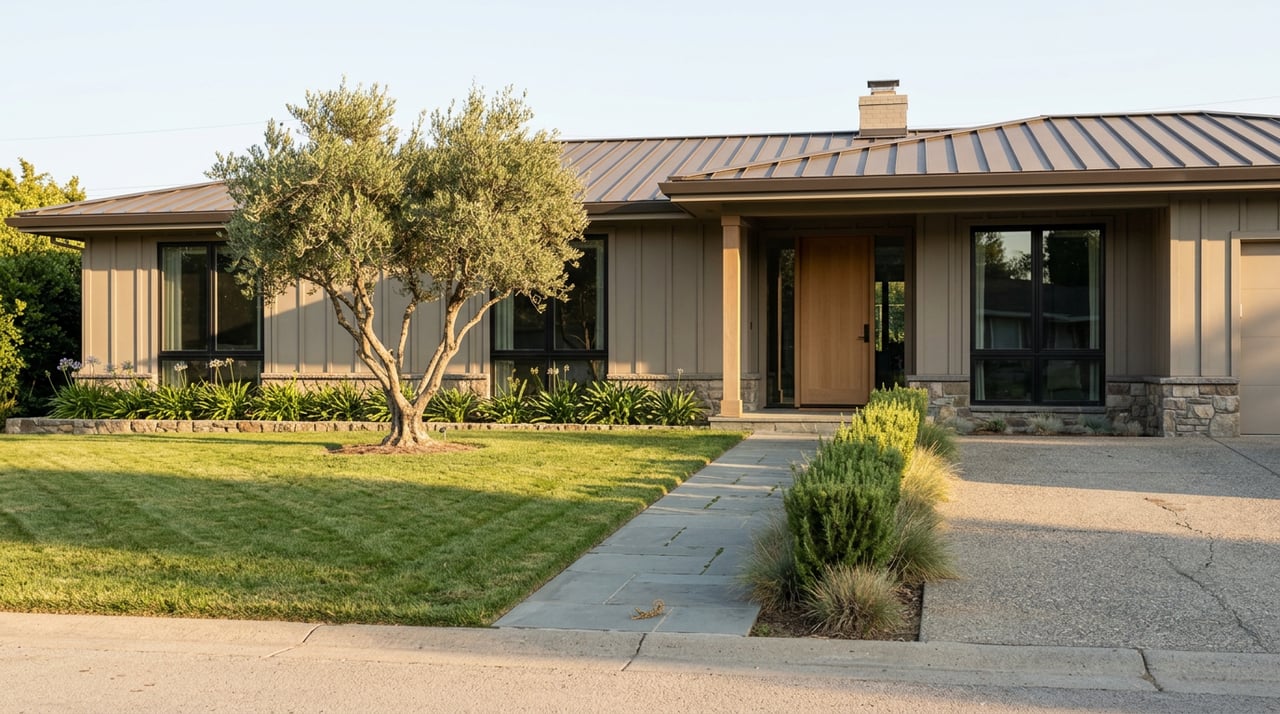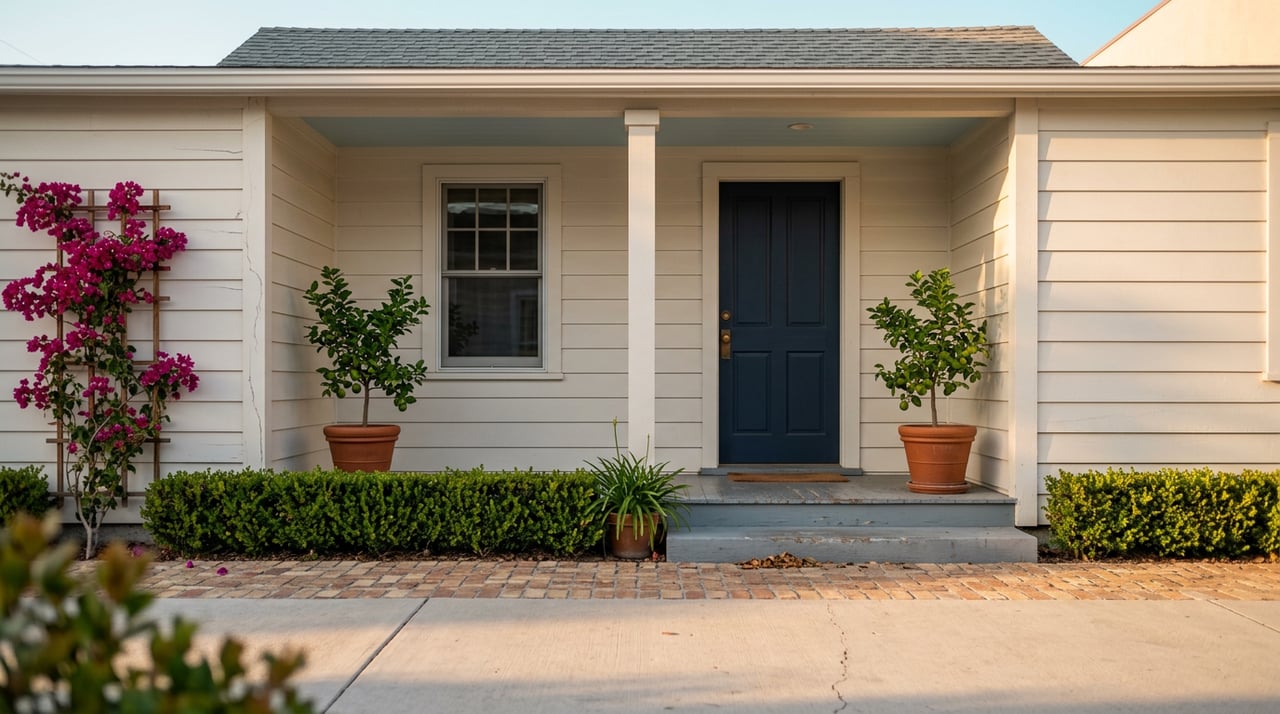
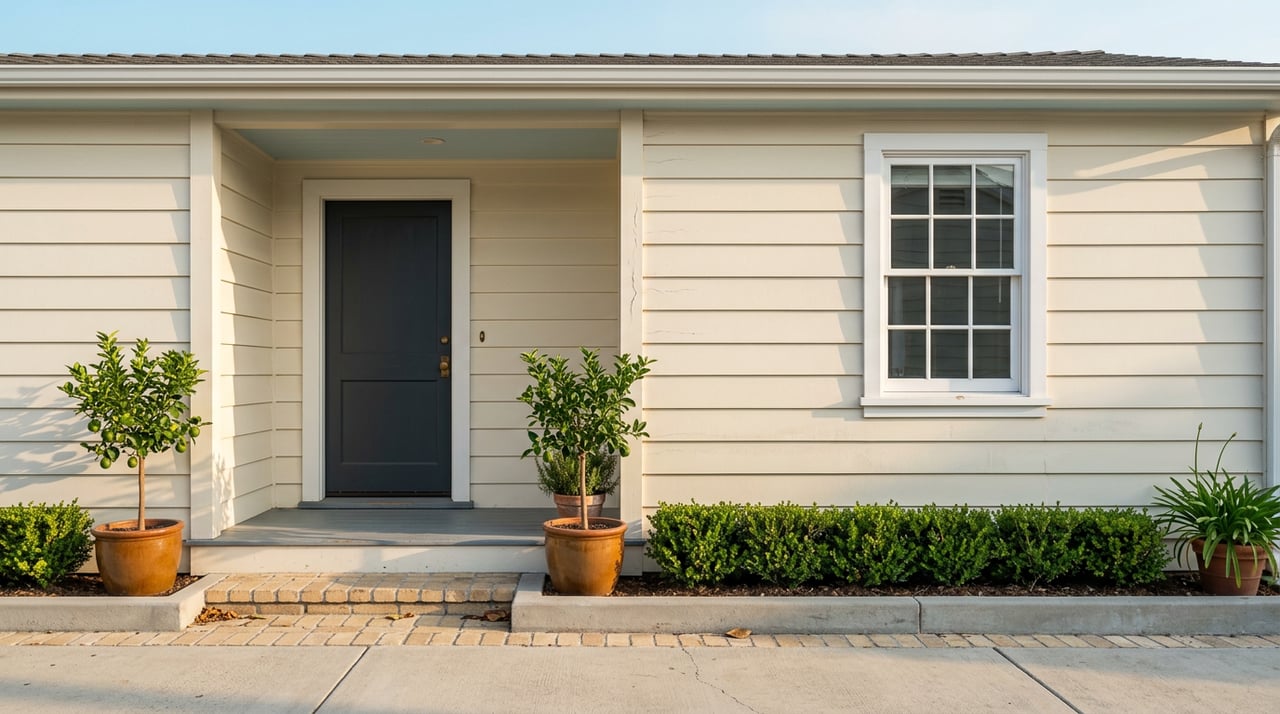
Walk the loop on a Tuesday morning in August and Balboa Island reads like one market. Same seawall, same Duffys motoring past, same short blocks stitched together by frozen banana lines on Marine Avenue. Look at what closed in the last ninety days and it reads like three markets stacked on top of each other, none of which the headline median actually describes.
That gap between the island as a place and the island as a transaction is the thing worth understanding before you write an offer. The median sale price on Balboa Island landed at $4.7 million in February 2026, but almost nothing sells at $4.7 million. Homes trade at $1.5 million or $5.5 million or $12 million, and which tier your budget belongs to has less to do with the price band you picked than with what happens to be listed the week you are ready.
Three sub-markets on half a square mile
Total land area on the island runs under half a square mile across three connected pieces of ground. That constraint, more than any macro trend, sets the rules.
| Tier | Where it lives | Recent price band | What you get |
|---|---|---|---|
| Bayfront | North and South Bayfront on the Main Island | $8M to $15M+ | Direct water frontage, dock rights, patio on the seawall |
| Interior Main Island | Numbered avenues between the two bayfronts | Roughly $4M to $6.5M for single-family | Walk to Marine Avenue, full-lot single-family, occasional duplex |
| Little Island and the Quiet End | Little Balboa Island and Emerald / South-end corners | $1.5M condo entry into the mid-$4M range | Quieter blocks, Grand Canal frontage, smaller cottages and condos |
The interior tier is where most transactions actually happen. It is also where the median gets set, and where the price-per-square-foot conversation matters most. As of early June 2026, active inventory across the island sat at sixteen listings with a median list price near $6.85 million and average price per square foot above $3,200. That is a thin market by any definition.
Bayfront and the linear-foot premium
On bayfront, square footage matters less than water frontage. A standard bayfront parcel gives you around 30 linear feet on the seawall. Anything wider is a story on its own. Current inventory includes a newly built 30-foot bayfront asking just under $13 million and an oversized parcel with 45 feet of frontage and a private pier and dock trading in the same neighborhood. That is roughly $180,000 to $250,000 per bayfront foot before you even open the front door.
Two things drive the premium beyond the view. First, dock rights and pier access are effectively non-replicable. The city does not create new bayfront. Second, the properties sit on the loop that residents actually walk every day, which means bayfront homes trade both as houses and as a front-row seat to the Newport Beach Christmas Boat Parade, the Old Glory Boat Parade of Balboa Island, and every ferry crossing in between.
If you are shopping in this tier, the transaction friction is not price. It is condition. Many bayfront homes have been in the same family for decades. Some are pristine full rebuilds. Others were last remodeled when the concrete bridge was replaced in 1981. The delta between those two outcomes on the same block can be four million dollars, and it is not always obvious from the listing photos.
The interior blocks, where the market clears
Step off the bayfront and the math changes. Interior Main Island single-family homes trade around a $5.5 million average, with individual homes running from the high $3M range for original cottages into the $8M range for full custom rebuilds on wider lots.
The variable that moves the number most is not square footage. It is lot geometry and parking. A standard Balboa Island lot is 30 feet wide. A 40-foot lot, like the mid-century cottage on Onyx Avenue currently active on the market, is considered rare on the island and carries a premium because of what it lets you build and, crucially, where you can park. Balboa Island parking is a real cost, not a footnote. On many blocks there is no street parking during summer, and a home with two dedicated garage spaces plus an alley pad is worth measurable dollars more than an otherwise identical home with one space and no pad.
The interior tier is also where Compass Coming Soon tends to matter most. Because active inventory is so thin, an interior listing that goes to the open MLS on a Thursday can have three offers by Sunday. Pre-market visibility, quiet buyer feedback, and a considered launch date usually produce a cleaner outcome for a seller than a race to the weekend. That is the reasoning behind our approach to Coming Soon on this kind of listing.
Little Island, the Quiet End, and the condo entry point
The third tier is where first-time Balboa buyers usually land. Little Balboa Island sits across a short bridge from the Main Island, has a more residential feel with no commercial frontage, and generally trades at a discount to comparable Main Island interior product. Current examples include single-family homes on Abalone Avenue in the mid-$4M range.
Condo entry points sit lower. Balboa Island condos average closer to $1.5 million, which is the only way onto the island under $2M for most buyers who are not inheriting. Watch for two things at this tier. Many condos are duplexes converted or held as two units, which affects financing and rental math. And the Grand Canal frontage on Little Island, along with the South Bayfront edge sometimes called the Quiet End near Emerald Avenue, carries its own micro-premium that is not always priced into the initial ask.
Why timing beats budget
Here is the mechanism the headline median hides. There are typically only around five actively marketed listings on Balboa Island at any given moment. Ten homes sold in February 2026. Days on market compressed from 90 days a year earlier to 38 days that same month.
Thin inventory does not mean slow. It means the market clears in a handful of transactions, and if the two houses that fit your criteria both trade in the same week, your budget sits idle for months.
The practical implication for a buyer: pick your tier first, then pick your window. If you are looking at the interior single-family band, you should expect to see maybe two or three genuinely comparable properties come to market over a six-month search. If you are looking at bayfront with a specific frontage width, the count could easily be zero across the same window. Building a plan that assumes you will pick from five options is not the plan the data supports.
For sellers, the same scarcity cuts the other direction. A well-prepared listing on the interior tier can trade above list because the buyers who missed the last comparable are still waiting. Preparation, timing, and a launch strategy that respects the loop of neighbors, brokers, and repeat visitors actually change the outcome.
Transaction friction worth knowing about
A few island-specific checks that catch people who bring mainland assumptions to the negotiation:
- Parking is a valuation input. Confirm the number and dimensions of garage spaces, alley access, and any resident permit rights before you finalize price. On summer weekends, this can be the difference between a home that functions and one that does not.
- Rebuild vs. remodel status affects insurance and lending. A 1940s cottage with modernized systems reads differently to an underwriter than a 2018 full rebuild on the same footprint.
- Bayfront pier and dock rights are individual. Frontage does not automatically confer dock permits. Verify the actual permitted dock configuration on the parcel.
- Seasonality is real. The island's winter population sits around 4,500 and roughly doubles with summer renters, per longstanding community history. Showings, inspection access, and rental income assumptions all move with that rhythm.
- New commercial tenants change block character. Arc Balboa Island at 224 Marine Avenue is expected to complete construction by the end of 2026, and Jasper Coffee is in soft opening on the same corridor. For a property one block off Marine, that matters more than a broad market comp.
A short FAQ
Is the February 2026 median a good number to plan around? As a directional figure, yes. As a pricing anchor for a specific home, no. The island is small enough that ten sales moves the median, and the mix of bayfront and interior trades in any given month swings the number by more than a million dollars either direction.
Do bayfront homes on the north side and south side trade the same? No. Sun orientation, harbor view corridor, and proximity to the ferry landing all matter. South Bayfront's west end and specific stretches of North Bayfront carry their own premiums beyond the general bayfront band.
How competitive is the market right now? Compressed. Days on market fell from 90 to 38 year over year in February 2026, and inventory sat in the mid-teens by early June. Prepared listings that launch well are trading quickly.
What is the entry point for owning on the island? Realistically, condos in the low-to-mid $1M range are the floor. Under $3M for single-family is rare and usually indicates a rebuild candidate rather than a turnkey home.
If you are weighing Balboa Island against Peninsula Point, Lido Isle, or Corona del Mar, or comparing tiers inside the island itself, we are happy to walk you through recent comps and the specific properties that fit your window. Mason | Taylor Associates works this market every week. Schedule a confidential buying or selling consultation and we will map the tier, the timing, and the plan together.